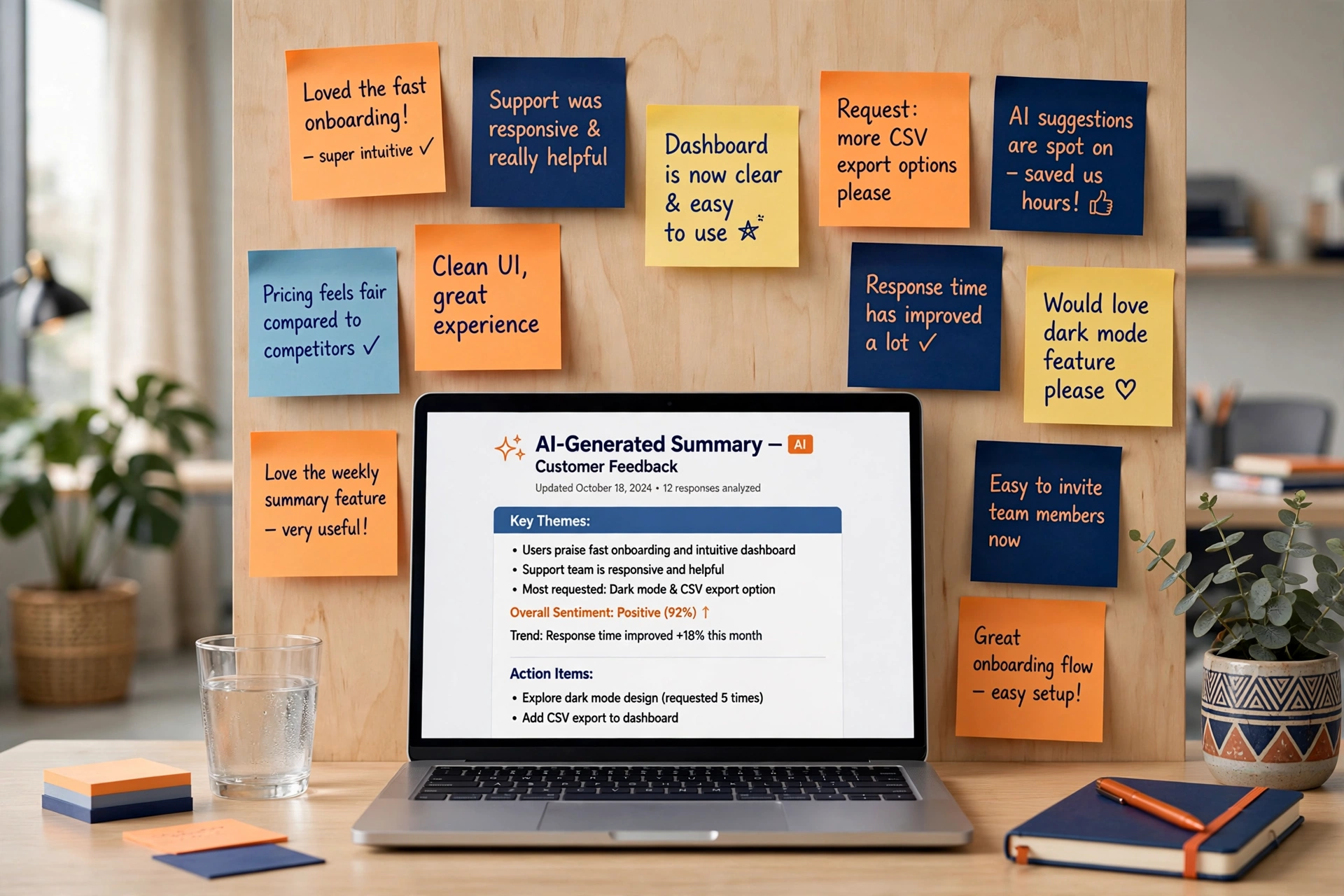
Every business sits on a goldmine of customer feedback — reviews, support tickets, survey replies, casual "by the way" comments — and almost nobody does anything with it. I know, because I was that person. I had a folder with 200+ customer comments and zero idea what to do with them besides feel vaguely guilty.
Here's the 30-minute workflow I use now. It turns that pile into a prioritized list of fixes, ranked by what'll actually move the needle.
Key takeaways:
- Don't read feedback one by one — paste it all into AI and ask for patterns first.
- Rank fixes by pain × frequency: what hurts most, mentioned most, wins.
- Close the loop: tell customers you fixed their thing. That's free loyalty.
Step 1: Dump It All in One Place (5 min)
Grab everything: Google reviews, support emails, survey responses, social comments, even the scribbled notes from phone calls. Paste it into one document. Don't clean it up — typos and rants are fine. AI doesn't judge; it just needs volume. Aim for at least 15–20 pieces of feedback. Fewer than that and you're guessing, not analyzing.
Step 2: Ask AI for the Patterns (10 min)
Paste the whole pile into your AI tool of choice with this:
"Analyze this customer feedback and group it into themes. For each theme, tell me: what customers are saying, how many mentioned it, and one representative quote. Sort by frequency. [paste feedback]"
You'll get something like: "Shipping complaints (14 mentions), confusing checkout (9), love the product quality (22)." That frequency count is the whole game — it separates the one loud complainer from the real problem.
Step 3: Rank by Pain × Frequency (10 min)
Now ask the follow-up that turns themes into decisions:
"For each theme, rate two things 1–5: how much pain it causes customers, and how fixable it seems for a small team. Then rank the themes by (pain × mentions), highest first."
This stops you from fixing the easy stuff first just because it's easy. A painful, frequently-mentioned problem you can fix beats a minor annoyance every time.
Step 4: Turn Each Fix into One Action (5 min)
For your top 3 themes, one more prompt:
"For this customer complaint theme — [theme] — suggest 3 concrete fixes a small business could implement this week, cheapest first."
"Cheapest first" matters. Half the time the fix isn't a new system — it's rewriting one confusing sentence on your checkout page or adding a tracking link to your shipping emails.
Step 5: Close the Loop (Ongoing)
Here's the part everyone skips, and it's the highest-ROI step. When you fix something customers complained about, tell them. A short email — "You asked, we fixed it" — turns complainers into loyalists. People don't expect perfection; they expect to be heard.
Make It a Habit, Not a Project
I run this workflow once a month now, and it takes less time than one team meeting. The feedback keeps coming anyway — reviews, replies, comments — so the pile rebuilds itself. The question was never "do we have feedback," it was "do we have a system for it." Now you do.
Two related workflows if you want to go deeper: our customer support reply prompts handle the individual responses, and the 15-minute sales call prep routine shows the same "paste, pattern, act" rhythm applied to prospects.